Downward-Facing Dog
अधो मुख श्वानासन · Adho Mukha Svanasana (AH-doh MOO-kah shvah-NAH-sah-nah)
inversion · beginner
| Sanskrit Name & Meaning | अधो मुख श्वानासन (Adho Mukha Svanasana (AH-doh MOO-kah shvah-NAH-sah-nah)) |
|---|---|
| Category | Inversion |
| Level | Beginner |
| Key Benefits | Lengthens the hamstrings, calves, and spine, Builds shoulder and upper-body strength, Mild inversion that eases fatigue and mental fog, Relieves tension in the neck and upper back |
| Best Time to Practice | Any time as a transitional or resting pose within a flow, or on its own for one to three minutes when you need a quick physical and mental reset. |
| Contraindications |
|
| Precautions | Don't force the heels to the floor at the expense of a rounded spine; Avoid splaying the fingers unevenly or collapsing weight into the wrists; Keep the neck relaxed rather than jamming the chin toward the chest |
Origin & History
Downward-Facing Dog doesn't appear as a named posture in the older hatha yoga texts like the Hatha Yoga Pradipika or the Gheranda Samhita, which describe far fewer standing and inverted shapes than modern practitioners might expect. Its rise to prominence tracks closely with the development of the vinyasa-style flowing sequences associated with Krishnamacharya's teaching in early 20th-century Mysore, where it became one of the connecting shapes stitching standing poses, forward folds, and backbends together into a continuous sequence, most visibly as a repeated waypoint in the Surya Namaskar (Sun Salutation) cycle. Its ubiquity today, appearing in nearly every style of modern yoga from Ashtanga to Vinyasa Flow to Power Yoga, owes a great deal to how well it functions structurally: it's simultaneously a stretch, a strength-builder, and a brief rest, which made it indispensable once yoga sequences started moving continuously from pose to pose rather than holding static seated postures for long periods, as the earlier meditative hatha tradition had emphasized.
Sanskrit Word Breakdown & Meaning
The name breaks into four parts: adho meaning "down" or "downward," mukha meaning "face" or "mouth," svana meaning "dog," and asana meaning "seat" or "pose." Together it translates literally to "downward-facing dog pose," a direct, almost architectural description of the shape rather than a symbolic or mythological reference. The name is thought to come from the way dogs and other animals naturally stretch after resting, extending the front legs forward and lifting the hips, a movement anyone who's watched a dog wake up from a nap will instantly recognize. It's one of the more literally-named asanas in the entire system, alongside poses like Balasana (Child's Pose) or Bhujangasana (Cobra Pose), all part of a broader tradition in hatha yoga of naming postures after animals whose natural movement or stillness the human body is asked to imitate.
Benefits in Detail
Physically, Downward Dog asks two very different things of the body at once, which is part of what makes it deceptively challenging for beginners. The upper body, particularly the shoulders, upper back, and forearms, has to actively press the floor away and stabilize the shoulder blades, essentially performing an inverted, angled push-up position. Meanwhile the back body, from the calves through the hamstrings to the low back, is being asked to lengthen under that same weight-bearing structure. Practiced consistently, this combination builds real shoulder and core strength while simultaneously improving hamstring and calf flexibility, which is why it's often prescribed as a corrective stretch for people who sit for long hours and develop tight, shortened hamstrings.
Mentally, because the head is below the heart, the pose has a mildly inverting effect that many people describe as clearing and refreshing, similar to the effect of a short rest but without lying down completely. It's frequently used as a brief reset point mid-sequence: a place to pause, lengthen the breath, and let the nervous system settle before moving into the next, more demanding shape.
Energetically, inversions in the hatha yoga tradition are associated with reversing the usual downward flow of apana (the downward-moving vital energy) and encouraging prana to circulate more freely toward the head and heart centers. Even a mild inversion like this one is traditionally considered to have a disproportionately large effect on mental clarity and mood relative to how physically demanding it is, which is part of why so many teachers return to it again and again throughout a single class.
Step-by-Step Instructions
- Step 1
Start on hands and knees, wrists stacked under shoulders and knees under hips, in a tabletop position.
- Step 2
Spread the fingers wide and press firmly through the whole hand, especially the index finger and thumb mounds.
- Step 3
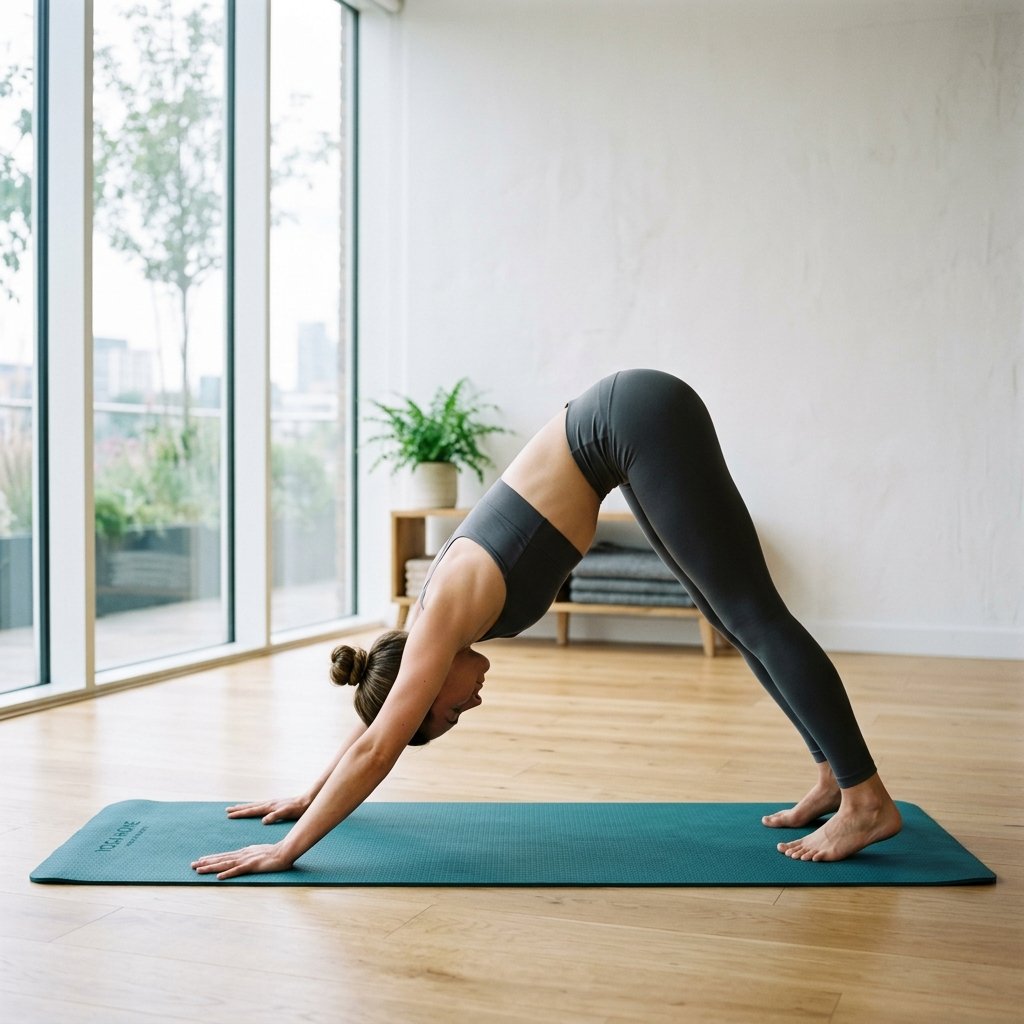
Tuck the toes and, on an exhale, lift the hips up and back, straightening the legs as much as feels comfortable.
- Step 4
Keep a generous bend in the knees if the hamstrings are tight, prioritizing a long spine over straight legs.
- Step 5
Draw the shoulder blades down the back, away from the ears, and let the head hang relaxed between the arms.
- Step 6
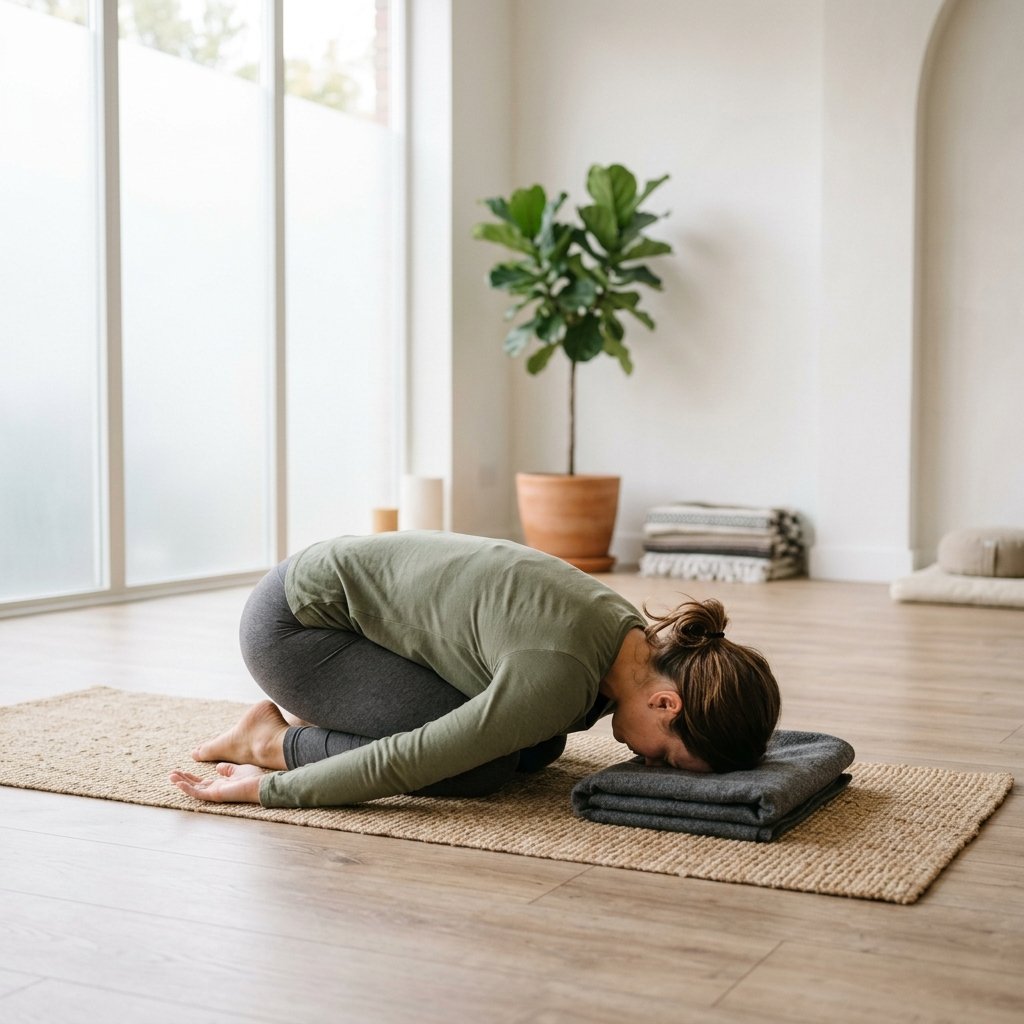
Hold for five to ten breaths, pedaling the feet gently if the calves feel tight, then rest in Child's Pose.
Contraindications
Because Downward Dog puts real load through the wrists and is technically a mild inversion, it has a slightly longer list of situations where it needs to be modified or skipped than a purely grounded pose like Tadasana would.
Carpal tunnel syndrome or wrist injury
The pose loads significant body weight directly through extended, weight-bearing wrists, which can aggravate nerve compression or existing wrist strain.
Uncontrolled high blood pressure or retinal conditions like detached retina
As a mild inversion, it increases blood flow and pressure to the head and eyes, which is inadvisable when those systems are already compromised.
Late-term pregnancy
The deep hip-to-heel fold and abdominal compression can feel restrictive and unnecessarily strain the abdominal wall as the belly grows; a supported, wall-based variation is usually better.
Shoulder impingement or recent shoulder surgery
The pose demands a large range of overhead shoulder flexion under load, which can pinch already-irritated shoulder tissue.
Precautions & Common Mistakes
The single most common mistake is trying to force the heels flat onto the mat, which most bodies, especially tight-hamstringed beginners, simply cannot do without rounding the lower spine to compensate. The heels touching the floor is not the goal; a long, straight spine with the hips as the highest point of the body is the goal, and bent knees are a completely legitimate way to get there while the hamstrings are still lengthening over time. Second, watch the hands: fingers should be spread wide with the index finger pointing forward and weight distributed evenly across the whole hand, not collapsed into the heel of the palm or the wrist crease, which is what typically triggers wrist pain. Third, resist cranking the neck to look at your feet or your navel; let the head hang heavy and relaxed between the upper arms, with the ears roughly in line with the biceps. Finally, if you notice the shoulders creeping up toward the ears, actively draw the shoulder blades down the back; this single adjustment resolves a surprising amount of the neck and upper-trapezius tension people associate with this pose.
Modifications, Props & Related Asanas
Beginners and anyone with tight hamstrings should keep the knees generously bent, focusing on lengthening the spine rather than straightening the legs; the pose still delivers its core benefits this way. Those with wrist sensitivity can practice on the forearms (Dolphin Pose) instead, which removes wrist extension from the equation entirely while preserving the shoulder and hamstring work. A folded blanket under the heel of each hand can also relieve pressure for mild wrist discomfort. Pregnant students, especially in the second and third trimesters, often do better with a wall-supported variation: hands on the wall at hip height, hips hinging back, which achieves a similar spinal lengthening without inverting or compressing the abdomen. Downward Dog connects most directly to Balasana (Child's Pose), which is frequently used as its resting counterpart, and to Adho Mukha Vrksasana (Handstand) and other more advanced inversions that build on the same shoulder-stabilizing foundation.