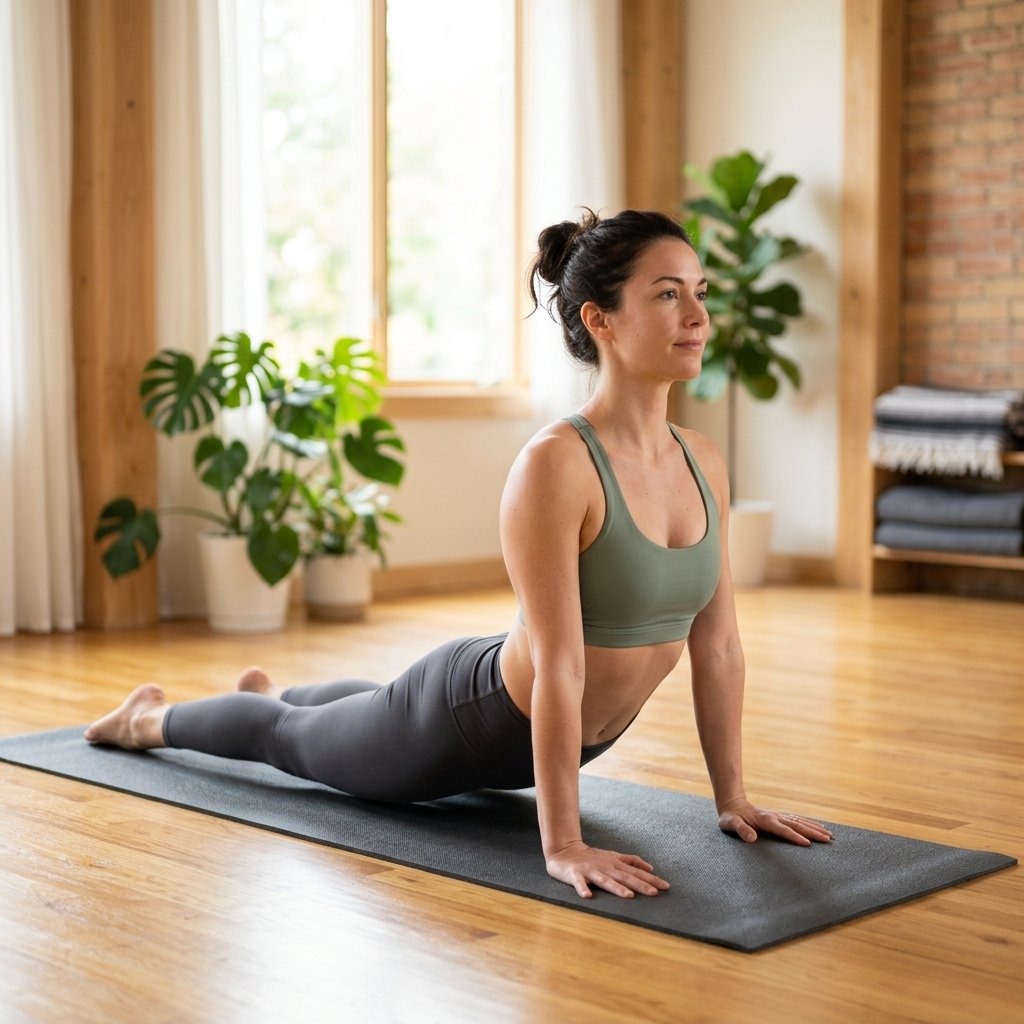
Cobra Pose
भुजङ्गासन · Bhujangasana (boo-jang-GAH-sah-nah)
backbend · beginner
| Sanskrit Name & Meaning | भुजङ्गासन (Bhujangasana (boo-jang-GAH-sah-nah)) |
|---|---|
| Category | Backbend |
| Level | Beginner |
| Key Benefits | Strengthens the muscles of the spine and upper back, Opens the chest, shoulders, and front of the torso, Improves spinal flexibility and posture, Can relieve mild stress and fatigue by counteracting slumped posture |
| Best Time to Practice | Mid-morning or afternoon as an energizing backbend, or any time you've been sitting hunched over a desk or screen. |
| Contraindications |
|
| Precautions | Lift with the back muscles, not by pushing hard through the arms; Keep the elbows slightly bent rather than locking them straight; Avoid crunching the neck back; keep it as a long extension of the spine |
Origin & History
Backbending postures modeled on animals appear scattered throughout the hatha yoga tradition, and Bhujangasana in something close to its modern form is described in texts associated with the broader 20th-century revival and systemization of asana practice, again closely tied to Krishnamacharya's teaching and the students, including Iyengar and Jois, who expanded and formalized it into the vocabularies now taught worldwide. It became a fixture of the Sun Salutation sequence in most Vinyasa-based lineages, appearing as the backbending counterpoint to the forward-folding and inverting shapes elsewhere in the cycle. Its accessibility, requiring no equipment, minimal space, and no significant flexibility to attempt safely at a beginner level, made it one of the most widely taught backbends as yoga spread internationally through the mid-to-late 20th century, often serving as many students' first introduction to backbending as a category of movement at all.
Sanskrit Word Breakdown & Meaning
Bhujangasana is built from bhujanga, meaning "serpent" or "cobra," and asana, "pose." The image is a cobra raising the front third of its body off the ground while the lower body stays coiled and grounded, exactly the shape the pose asks the practitioner to create: chest and head lifted and open, hips and legs anchored to the earth. Snakes carry significant symbolic weight throughout Indian spiritual traditions, most notably in the concept of kundalini, often depicted as a coiled serpent of dormant energy resting at the base of the spine. While Bhujangasana isn't a direct kundalini practice, the serpent imagery isn't accidental, this is a pose fundamentally about the spine, and the cobra is one of the most spine-centric animals in the natural world.
Benefits in Detail
Physically, Cobra Pose builds strength through the entire posterior chain of the upper body: the erector spinae muscles running along the spine, the muscles between the shoulder blades, and to a lesser extent the glutes and legs, which stay engaged to protect the lower back during the lift. Because it also opens the chest and front of the shoulders, muscles that tend to become tight and shortened from hours of forward-hunched sitting and screen use, it's frequently recommended as a direct antidote to typical desk posture, gently reversing the rounded-forward pattern that builds up over a workday.
Mentally, the pose has a genuinely energizing rather than sedating effect, distinguishing it from restorative shapes like Balasana. Opening the chest and lifting the gaze slightly upward tends to correlate, for most practitioners, with an uptick in alertness and a subtle lift in mood, which is part of why it's often placed earlier in a sequence or used as a quick pick-me-up rather than saved for the end of a practice.
Energetically, backbends in general are associated in the hatha tradition with stimulating and opening the front body's energy centers, particularly around the heart and chest, and with cultivating courage and openness as psychological qualities alongside the physical opening. The serpent imagery reinforces this: a cobra rising isn't aggressive by nature, it's alert, and that alert, engaged quality, rather than a collapsed or a strained one, is what a well-executed Cobra Pose is meant to embody.
Step-by-Step Instructions
- Step 1
Lie face down with legs extended, tops of the feet on the mat, and hands planted under the shoulders.
- Step 2
Hug the elbows in toward the ribs rather than letting them splay out to the sides.
- Step 3
Press the tops of the feet and thighs into the mat and engage the legs and glutes gently.
- Step 4
On an inhale, lift the chest using the back muscles first, letting the hands offer only light support.
- Step 5
Keep a soft bend in the elbows and draw the shoulder blades down away from the ears.
- Step 6
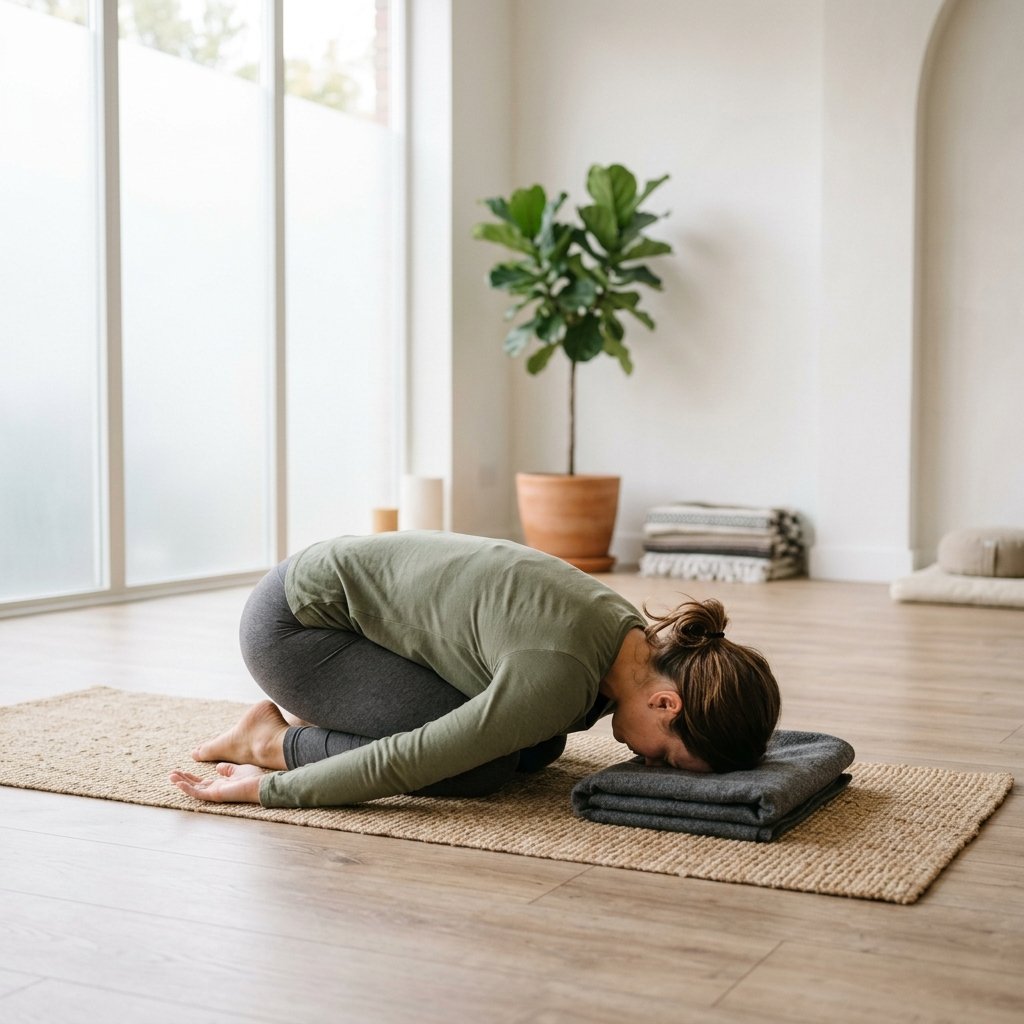
Hold for two to five breaths, keeping the neck long, then release back down and rest in Child's Pose.
Contraindications
Because Bhujangasana actively extends the lower spine and loads the wrists, it carries a real, if usually manageable, list of situations where it should be modified or avoided in favor of a gentler backbend.
Pregnancy
The pose compresses the abdomen against the floor and increases intra-abdominal pressure, which isn't appropriate as the belly grows.
Recent abdominal surgery or hernia
Pressing the front of the body into the floor and extending the spine puts direct pressure on the abdominal wall and surgical sites.
Carpal tunnel syndrome or acute wrist injury
The hands bear weight in an extended position to help lift the chest, which can aggravate wrist nerve compression.
Recent back injury, especially disc issues
Backbending compresses the posterior spine and can worsen disc-related pain if done without medical clearance.
Precautions & Common Mistakes
By far the most common mistake in Cobra Pose is trying to lift too high, too fast, by pushing hard through straight arms, which shifts the work away from the back muscles and dumps compressive force directly into the lower spine. The height of the lift should always be dictated by how far the upper back and shoulder muscles can lift the chest on their own; the hands are there for balance and a small assist, not as the primary lifting mechanism, which is why keeping a slight, permanent bend in the elbows is such an important cue. A second common error is cranking the head back to look at the ceiling, which compresses the back of the neck; the neck should stay a long, natural extension of the spine's curve, with the gaze forward or only slightly upward. Third, many students unconsciously lift the shoulders up toward the ears during the effort of the lift; consciously drawing them down and back, away from the ears, keeps the trapezius from taking over work that belongs to the muscles lower down the back. Finally, engaging the legs and glutes gently throughout, rather than letting them go slack, meaningfully protects the lower back by distributing the backbend across a longer stretch of the spine instead of concentrating it in the lumbar region alone.
Modifications, Props & Related Asanas
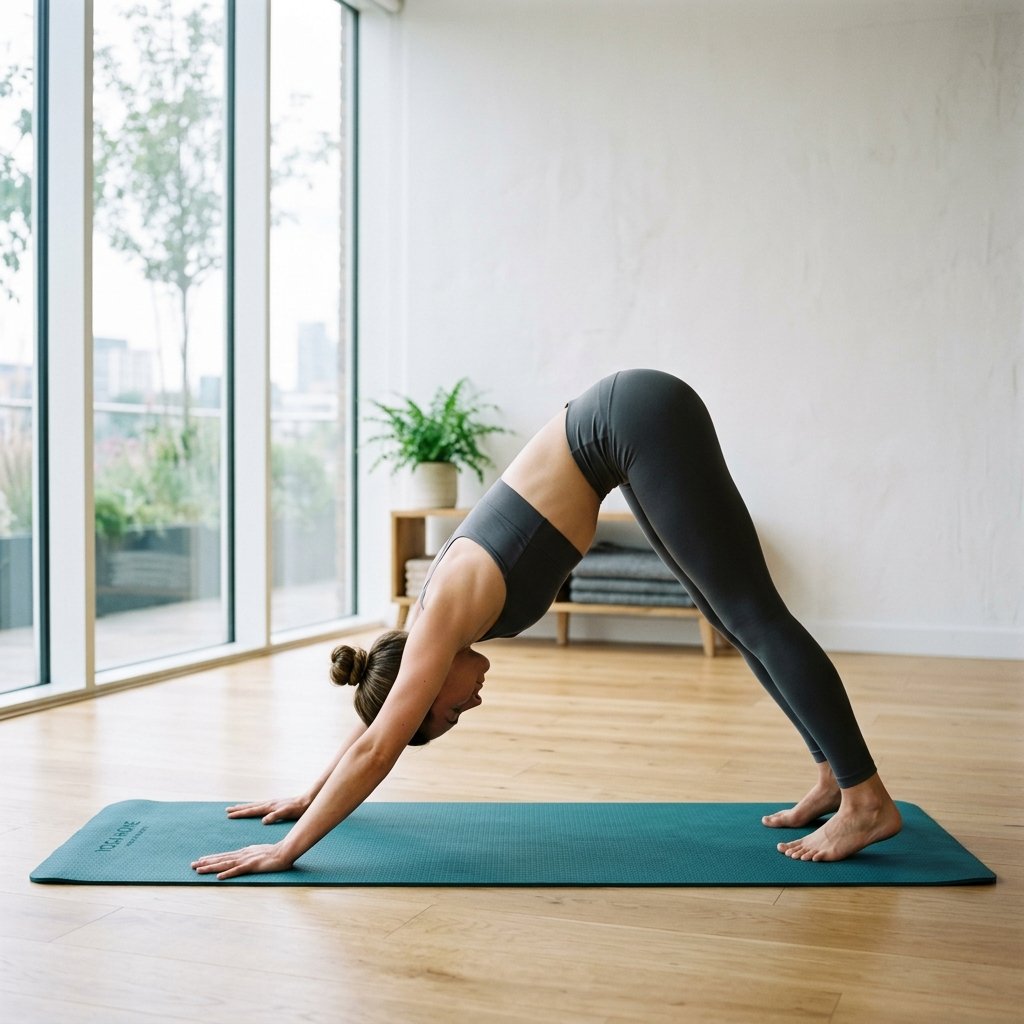
Beginners or anyone with lower-back sensitivity should try Baby Cobra first: hands stay light on the mat, elbows bent and hugged toward the ribs, and the chest lifts only a few inches, using back strength rather than arm strength almost entirely. This variation delivers most of the strengthening and opening benefit with a fraction of the spinal compression. Placing a folded blanket under the hips can also reduce strain for sensitive lower backs. For those with wrist discomfort, coming up onto the forearms in a Sphinx Pose position removes wrist extension from the equation while still opening the chest. Bhujangasana relates closely to Balasana (Child's Pose), which serves as its natural counter-stretch, folding the spine in the opposite direction immediately afterward, and to Adho Mukha Svanasana (Downward Dog), which often follows in a Sun Salutation sequence to lengthen the spine back out after the backbend.