Bridge Pose
सेतु बन्धासन · Setu Bandhasana (SAY-too bahn-DHAH-sah-nah)
backbend · beginner
| Sanskrit Name & Meaning | सेतु बन्धासन (Setu Bandhasana (SAY-too bahn-DHAH-sah-nah)) |
|---|---|
| Category | Backbend |
| Level | Beginner |
| Key Benefits | Strengthens the glutes, hamstrings, and lower back, Gently opens the chest, shoulders, and hip flexors, Can relieve mild back pain and tension after prolonged sitting, Calming enough to be used as a restorative backbend |
| Best Time to Practice | Toward the end of a practice as a gentler backbend, or in the evening to counteract a day of sitting. |
| Contraindications |
|
| Precautions | Keep the knees tracking directly over the ankles, not splaying outward; Avoid turning the head side to side while the hips are lifted; Lower down with control rather than dropping the hips suddenly |
Origin & History
Bridge-shaped backbends appear in various forms throughout the modern asana tradition, and Setu Bandhasana in its commonly taught form, a gentler, more accessible variant compared to the fuller backbend Urdhva Dhanurasana (Wheel Pose), became a staple of 20th-century hatha yoga instruction largely because it offered many of the chest-opening and spine-strengthening benefits of deeper backbends with a significantly lower barrier to entry and lower risk profile. It's frequently taught, particularly in Iyengar-influenced and therapeutic yoga lineages, as either a standalone pose or a preparatory step on the way toward more advanced backbends, and it has become a fixture of restorative and gentle yoga classes precisely because it can be practiced actively, as a strengthening pose, or passively, supported by a block under the sacrum, as a nearly effortless resting shape.
Sanskrit Word Breakdown & Meaning
The name combines setu, meaning "bridge" or "dam," bandha, meaning "lock," "bond," or "to hold," and asana, "pose." Together it's usually rendered as "bridge pose," a direct description of the arched shape the body makes, hips lifted, shoulders and feet grounded, resembling the span of a bridge over the space beneath the lower back. The word bandha also carries a more technical meaning in hatha yoga, referring to internal energy locks created through specific muscular engagements, and some teachers connect the pose's name to the way it naturally engages a version of Mula Bandha (the root lock) and encourages awareness of the pelvic floor and lower abdomen, though the more common and straightforward reading of the name is simply the visual bridge shape itself.
Benefits in Detail
Physically, Bridge Pose is one of the more efficient exercises in the entire asana system for strengthening the posterior chain, the glutes, hamstrings, and the muscles running along the spine, all of which have to engage together to lift and hold the hips against gravity. At the same time, the position opens the front of the hips (the hip flexors) and the chest, two areas that tend to become chronically tight from long periods of seated posture, making it a genuinely complementary counterbalance to a desk-bound lifestyle in a way few single poses manage as efficiently.
Mentally, because the pose can be held actively with real muscular effort or, in its supported variation with a block under the sacrum, essentially without any effort at all, it occupies a useful middle ground between energizing and restorative practice. The gentle chest opening and the mild inversion of the torso relative to the hips tends to have a quietly uplifting effect on mood without the more intense stimulation of a deeper backbend.
Energetically, Bridge Pose is often described as encouraging prana to move more freely through the chest and throat while still keeping a stable, grounded connection to the earth through the feet and shoulders, a combination that echoes the pose's name: a stable structure that still creates an opening, a bridge, rather than a wall.
Step-by-Step Instructions
- Step 1
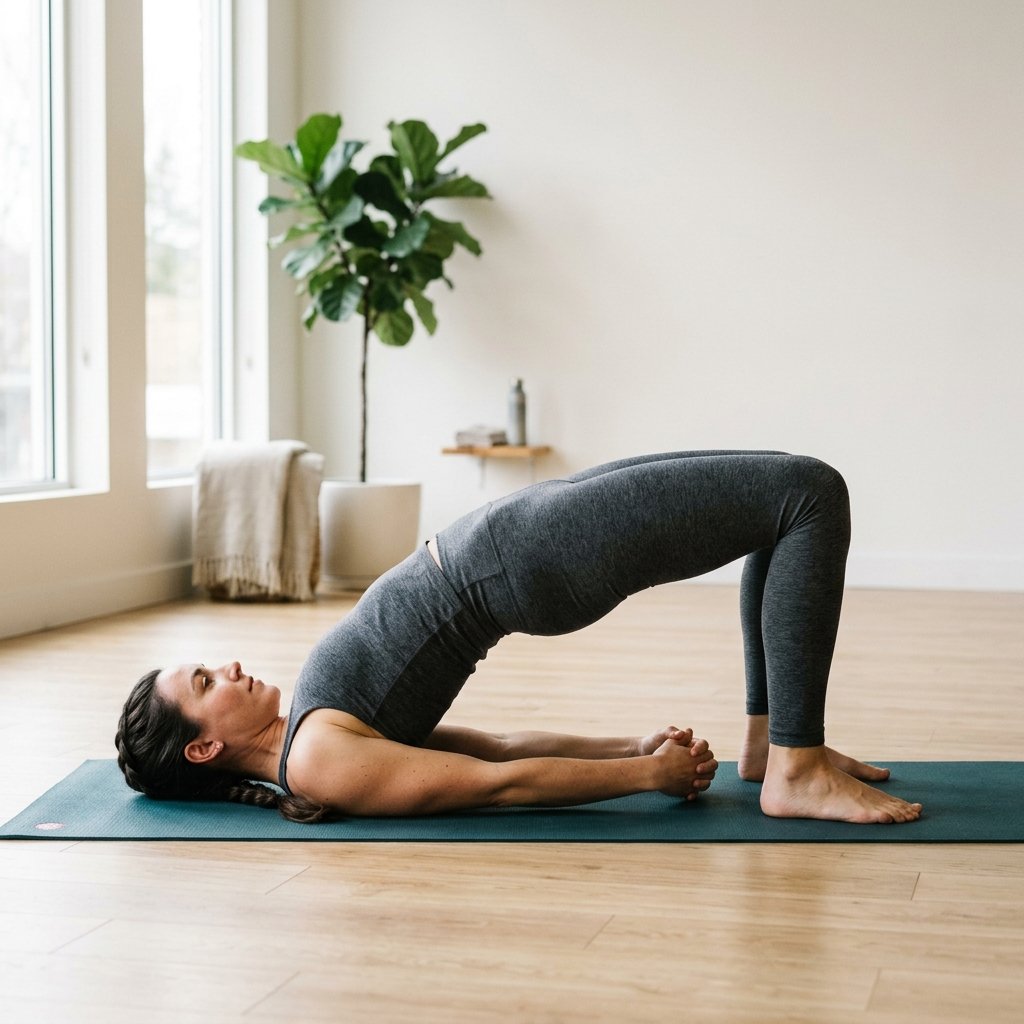
Lie on your back with knees bent, feet flat on the floor hip-width apart, close to the hips.
- Step 2
Press the feet and arms firmly into the floor, arms resting alongside the body, palms down.
- Step 3
On an inhale, lift the hips up toward the ceiling, keeping the knees tracking directly over the ankles.
- Step 4
Optionally clasp the hands underneath the back and roll the shoulders down and under.
- Step 5
Keep the neck neutral and still, gazing straight up at the ceiling throughout the hold.
- Step 6
Hold for five to eight breaths, then lower the spine back down slowly, one section at a time.
Contraindications
Because Bridge Pose loads weight through the neck and shoulders and asks the knees to stabilize under load, a few conditions call for a gentler, supported version or avoiding the pose altogether.
Neck injury
Weight rests partly on the shoulders and back of the neck area, and turning the head while in the pose can strain the cervical spine.
Recent knee injury or knee surgery
The knees stay bent and bear some load while stabilizing the lifted hips, which can stress a healing joint.
Late-term pregnancy
Lying flat on the back for an extended time can compress major blood vessels in later pregnancy; a supported, shorter variation or an alternative pose is usually recommended instead.
Precautions & Common Mistakes
The most common alignment mistake in Bridge Pose is letting the knees splay outward to the sides as the hips lift, which reduces the effectiveness of the glute engagement and can add unwanted torque to the knees; keeping the knees tracking directly forward, roughly in line with the ankles and hip-width apart, keeps both the strengthening benefit and the joint mechanics honest. Second, many students turn their heads to one side once the hips are lifted, often out of habit or to check their alignment in a mirror, which is one of the more avoidable ways to strain the neck in this pose; the head and neck should stay centered and still throughout, with the gaze fixed on the ceiling. Third, dropping the hips back to the floor abruptly at the end of the hold, rather than lowering with control through an exhale, removes much of the strengthening benefit and can jar the lower back; a slow, controlled descent, one vertebra at a time if possible, is worth the extra few seconds it takes. Finally, if clasping the hands underneath the back, keep the shoulders rolling under and down rather than shrugging up toward the ears, which both protects the neck and genuinely opens the chest more.
Modifications, Props & Related Asanas
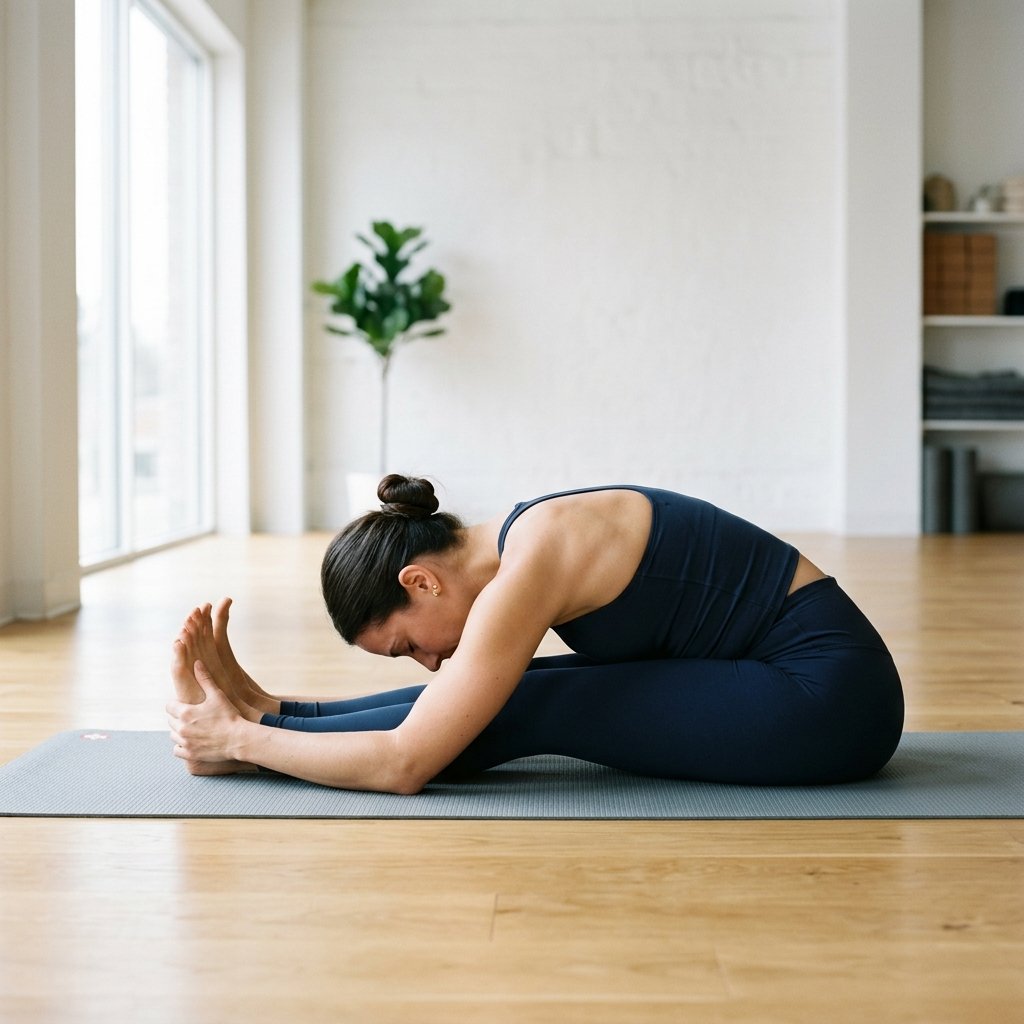
Placing a sturdy yoga block under the sacrum (the flat triangular bone at the base of the spine, not the lower lumbar vertebrae) transforms Bridge Pose into a passive, restorative variation that can be held comfortably for several minutes with no muscular effort at all, an excellent option for anyone with lower-back fatigue or simply looking for a gentler practice. A folded blanket under the shoulders can relieve pressure on the neck for those with cervical spine sensitivity. Keeping the arms alongside the body with palms down, rather than clasping the hands underneath, is a perfectly good option for beginners still building the strength and coordination for the clasped-hands variation. Setu Bandhasana is often taught as a stepping stone toward Urdhva Dhanurasana (Wheel Pose) for students building toward deeper backbends, and it pairs well with Paschimottanasana as a forward-folding counterpose afterward.